
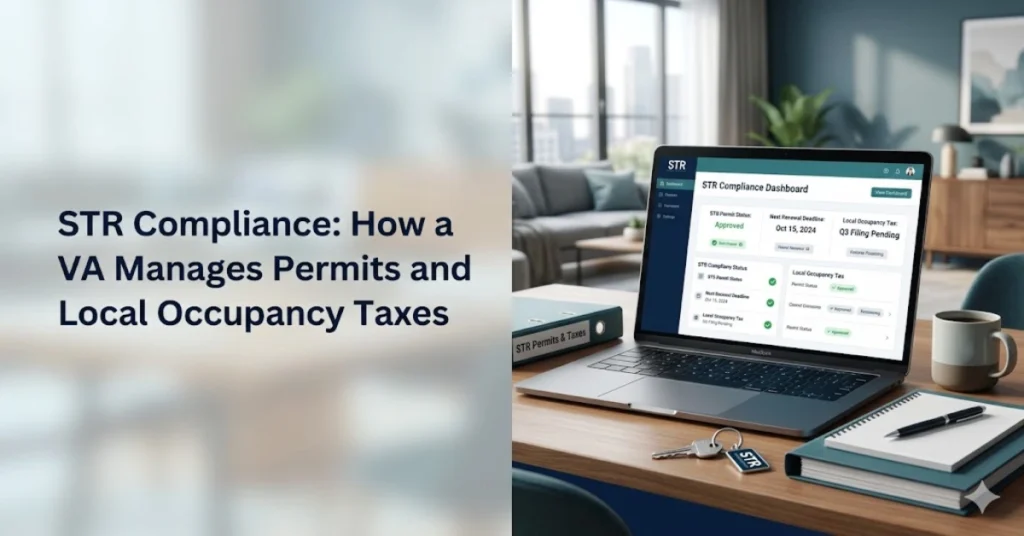
A virtual assistant manages STR compliance by tracking permit expirations, preparing Airbnb permit renewal paperwork, and filing local lodging taxes in areas where Airbnb does not remit everything for you.
Navigating short-term rental rules can quickly become an operational headache. Many real estate investors and hosts launch their properties only to get buried under a mountain of local paperwork, shifting city ordinances, and confusing tax guidelines. Because regulations and tax rules change completely by city, staying on top of deadlines requires an ironclad organizational framework. Partnering with STR Super VA gives you access to specialized STR virtual assistant support that acts as your operational backbone. Your VA builds a centralized filing system and maintains a proactive tracking calendar, keeping your properties protected while you focus on scaling your business portfolio.
Why STR Compliance Is Easy to Ignore and Expensive to Miss
A common trap for new hosts is assuming that booking platforms automatically take care of the legal details. While it is true that platforms handle state-level taxes in certain markets, this is often only a partial solution. Airbnb’s internal documentation explicitly states that hosts are ultimately responsible for checking local rules and ensuring full compliance with any taxes or registrations that the platform does not collect or remit automatically.
Failing to build a dedicated system for your properties can lead to catastrophic business risks. The operational details you must track usually include:
- Obtaining a local STR registration or land-use permit.
- Displaying active permit numbers directly on your public listings.
- Remitting hotel, occupancy, or local lodging tax at the city or county level.
- Submitting strict annual or bi-annual permit renewals.
If you miss a single monthly tax deadline or fail to renew a permit, local governments can issue massive fines, demand expensive back taxes with interest, or shut down your listing completely.
The VA’s Role in STR Compliance Management
A virtual assistant serves as your remote administrative manager for legal paperwork. It is important to remember that a VA does not provide formal legal advice or professional accounting services. Instead, they work directly under your guidance, or alongside your CPA or attorney, to execute the organizational tasks required to keep your business running smoothly.
An trained virtual assistant handles the tedious data entry and tracking that hosts frequently procrastinate on. They create a detailed directory of every property’s permit numbers, monitor local government portals for code updates, and track expiration dates. By gathering required compliance documents—such as proof of specialty insurance, certified floor plans, or updated owner identification—your VA ensures you are always ready to submit error-free paperwork to local code enforcement offices.
Tracking Airbnb Permits, Licenses, and Registrations
Many highly regulated tourist destinations require short-term rental owners to secure active licenses before welcoming their first guest. These jurisdictions frequently mandate that your registration number be prominently displayed within your public listing description to avoid automated fines.
To manage this, your virtual assistant builds a comprehensive compliance dashboard using shared spreadsheets or CRM tools. This tracker securely catalogs the property address, specific jurisdiction, permit number, issue date, expiration date, government portal login credentials, and required renewal documents. The VA programs automated alerts into the system 30 to 60 days before any deadline hits. This gives you plenty of time to review paperwork before submission, ensuring your properties stay continuously active without any costly listing dark periods.
Local Lodging / Occupancy Tax Filing When Airbnb Does Not Remit Everything
Tax collection varies wildly across the country. In some regions, Airbnb may automatically collect and remit your state-level sales tax, but completely ignore the county or city-level lodging tax. This leaves hosts vulnerable to local tax audits if they fail to file manual returns.
Your virtual assistant eliminates the guesswork from [local lodging tax filing] by organizing your revenue streams. Under your explicit direction, the VA identifies which local jurisdictions require direct filing by researching city and county tax collector websites. On a monthly or quarterly schedule, the VA downloads comprehensive gross revenue reports across all your booking channels—including Airbnb, Vrbo, and direct booking websites. They carefully separate taxable receipts from non-taxable fees based on your local rules, draft the required lodging tax forms, and upload the figures into the government portal for your final review and payment authorization.
Table: What a VA Manages in STR Compliance
| Compliance Area | What the VA Handles | Why It Matters |
| Permit tracking | Logs active permit numbers, issue dates, and hard expiration dates | Prevents accidental listing lapses and avoids local code enforcement fines |
| Renewal prep | Gathers updated insurance certificates and completes renewal forms | Keeps properties legally active in municipal systems year-round |
| Lodging tax data | Compiles gross revenue across all platforms by location and period | Makes manual tax filings fast, accurate, and completely audit-ready |
| Tax filing support | Drafts local tax returns and uploads figures to portals for host approval | Eliminates late-fees, penalties, and interest charges from city offices |
| Recordkeeping | Stores physical approvals, payment receipts, and historic filings | Simplifies future property sales, audits, and multi-property scaling |
STR Compliance With and Without a VA
Operating in regulated markets without administrative help is a recipe for operational anxiety. Comparing the two operational models shows how a virtual assistant stabilizes your business.
Without a VA
- Permits are tracked loosely in memory or hidden deep within scattered email threads.
- Filing deadlines are frequently missed or handled as a last-minute emergency, leading to costly errors.
- Hotel tax filing is rushed, causing inaccurate data entry and an increased risk of local municipal audits.
- Digital government portal logins are lost or reset constantly, causing administrative delays.
With a VA
- A centralized calendar and cloud dashboard track every single asset deadline automatically.
- All insurance proofs, floor plans, and municipal documents stay meticulously organized by property and year.
- Lodging tax returns are drafted well ahead of the deadline, allowing for calm, precise host or CPA reviews.
- A permanent digital paper trail of approvals and tax receipts is maintained for long-term protection.
Ultimately, a VA-managed compliance system provides the consistent documentation you need to protect your investment if a city decides to audit your business or update local ordinances.
How Compliance Connects to the Rest of Your STR System
Compliance does not exist in a vacuum. It directly impacts your broader [remote STR operations], including your day-to-day guest hospitality and real estate growth plans. For example, some cities require you to keep a physical log of all individuals entering the home; your VA can cross-reference this by pulling data from your smart lock and access management systems to prove vendor compliance.
Additionally, staying compliant is critical if your property handles an unexpected infrastructure breakdown. If code enforcement discovers you are operating an unpermitted rental while your VA is handling emergency maintenance coordination with local contractors, your entire business could face immediate suspension.
Furthermore, local compliance guidelines change completely if you decide to pivot toward mid-term rental management. Properties hosting stays longer than 30 days are often exempt from transient lodging taxes, but they may trigger traditional landlord-tenant laws. Your virtual assistant ensures your operational support for 30+ day stays utilizes the correct tax templates and lease structures based on the length of the guest’s stay.
FAQs
Do I really need a permit to run an Airbnb or STR?
Yes. Most cities, counties, and tourist destinations require active short-term rental permits, business licenses, or structural registrations. Operating without a license can lead to severe fines or a permanent ban on your property.
Does Airbnb collect and remit all my occupancy taxes automatically?
No. Airbnb only collects and remits taxes where they have explicit voluntary collection agreements with local governments. In many markets, hosts remain fully responsible for manually calculating, filing, and paying their city or county lodging taxes directly.
How can a virtual assistant help with local lodging tax filing?
A virtual assistant logs into your booking channels, pulls your gross revenue reports, organizes the numbers into the proper local tax templates, and sets up the online portal filing for your final approval and payment submission.
What happens if my STR permit expires or I forget to file taxes?
Local municipalities can issue heavy financial penalties, charge compounding interest on unpaid back taxes, revoke your business license, or force the booking platforms to completely remove your active listing from their sites.
Can the same VA manage compliance for multiple properties and cities?
Absolutely. An experienced VA uses centralized tracking spreadsheets and digital calendars to manage compliance rules across entirely different states, counties, and cities simultaneously, ensuring each unique deadline is met.
Do I still need an accountant or attorney if I have a VA for STR compliance?
Yes. A virtual assistant is an administrative specialist who organizes and executes workflows. They do not replace certified public accountants or legal professionals, who should always be consulted to verify complex local tax codes and laws.
Conclusion
A virtual assistant turns the chaos of municipal paperwork into a reliable, hands-off system. By systematically tracking permit expirations, organizing renewal applications, and preparing your monthly lodging tax filings, a VA eliminates operational risk. This proactive structure protects your cash flow, keeps your listings live, and gives you the peace of mind required to scale your portfolio.
Stop risking your real estate business on missed deadlines and confusing city paperwork. If you are ready to build an organized, audit-ready compliance framework, get started with STR Super VA today. Book a discovery call or call 866-328-9826 to learn how our team can protect your short-term rentals.