
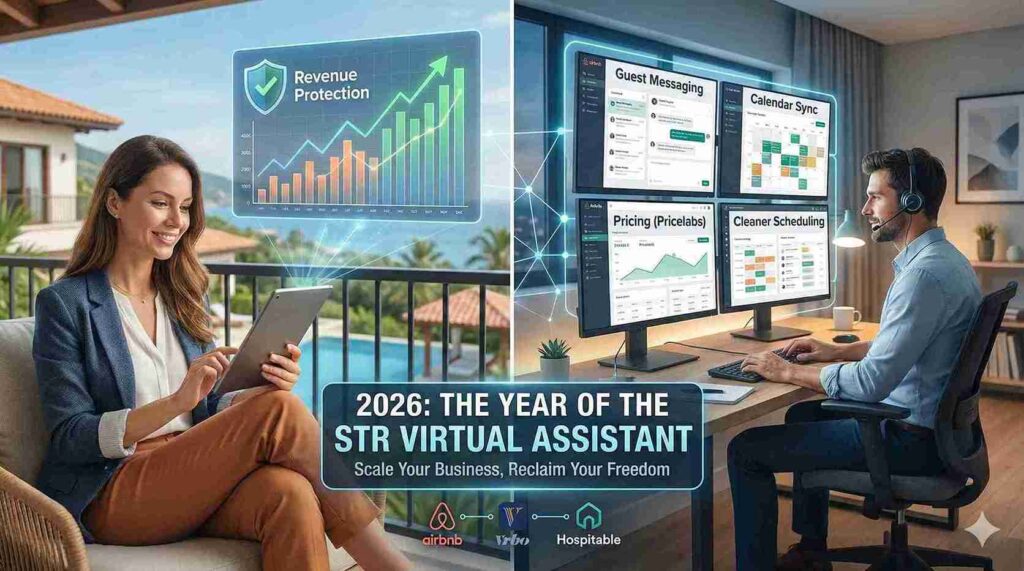
A trained STR virtual assistant is the single most important investment for serious Airbnb hosts in 2026 because they protect your time, maximize your revenue, and ensure the consistent guest experience required to scale.
Hosting has changed. Five years ago, you could list a spare room, reply to messages whenever you had a free moment, and still earn Superhost status. Today, the landscape is different. You are likely managing listings across Airbnb, Vrbo, and direct booking sites. You are juggling dynamic pricing tools, coordinating multiple cleaning crews, and dealing with guests who expect hotel-quality service instantly.
Attempting to do this all yourself is no longer a badge of honor. It is a bottleneck. To grow without burning out, you need to move from being a “host” to being a business owner. That transition starts with the right support.
What a Trained STR Virtual Assistant Really Does
A trained short-term rental virtual assistant is not a general administrative assistant. They are a specialized operator who understands the specific rhythm and urgency of the hospitality industry.
While a general VA might manage email inboxes, an STR specialist manages the entire digital lifecycle of a reservation. Their core daily tasks typically include:
- Guest Messaging: Handling inquiries, pre-arrival instructions, and check-out messages with a hospitality mindset.
- Calendar Management: syncing calendars across platforms to prevent double bookings.
- Pricing Updates: Monitoring your dynamic pricing tools and making manual adjustments for local events.
- Operations Coordination: Scheduling cleaners and dispatching maintenance when issues arise.
- Review Management: responding to guest reviews professionally to boost SEO.
- Claims Handling: Documenting damage and filing claims with AirCover or similar insurance programs.
For a deeper dive into these specific tasks, you can review our STR expert virtual assistant overview on STR Super VA.
Why “Trained” Matters More Than “Cheap Help”
Many hosts try to cut corners by hiring a generic freelancer from a general marketplace. This often leads to disaster. An untrained VA does not understand why a 4-star review is actually bad or why missing a check-in message by 10 minutes can ruin a trip.
At STR Super VA, our assistants are trained by active Superhosts. They know how to navigate Property Management Systems (PMS) like Hospitable, Hostaway, or Guesty. They understand how to use automated messaging rules without sounding like a robot.
Here is the difference between hiring a generic freelancer and a trained STR specialist:
| Feature | Generic VA (Marketplace Hire) | Trained STR Super VA |
| Onboarding Time | Weeks (You teach them everything) | Days (They know the platforms) |
| Tool Familiarity | Low (Needs training on PMS/Pricing) | High (Trained on major tools) |
| Guest Communication | Transactional and often slow | Warm, hospitable, and fast |
| Review Impact | Neutral or Negative | Positive (Focuses on resolution) |
| Pricing Knowledge | None | Understands occupancy & rates |
The Real ROI: Time, Reviews, and Revenue
The return on investment for a trained VA is not just about saving time. It is about protecting your revenue.
First, speed matters. Airbnb’s algorithm favors hosts who respond quickly. A dedicated VA ensures you never miss a booking inquiry because you were in a meeting or asleep.
Second, they protect your rates. Automation tools like Pricelabs are great, but they need human oversight. A VA can watch your occupancy trends and alert you if a weekend is priced too low or if you have a gap that needs a discount to fill.
Consider these scenarios:
- The Host with a Day Job: You are in a Zoom meeting when a guest messages that the keypad isn’t working. Without a VA, the guest waits an hour and leaves a bad review. With a VA, the issue is resolved in 5 minutes while you keep working.
- The Scaling Operator: You want to grow from 3 units to 15. You cannot physically manage 15 cleaning schedules alone. A VA acts as your dispatcher, ensuring every unit is turned over correctly so you can focus on acquiring the new properties.
Difficult Questions Experienced Hosts Actually Ask
You likely have valid concerns about handing over the keys to your business. Here are the honest answers to the tough questions we hear from experienced hosts.
Can a VA really handle guest communication at 2 a.m. without making mistakes?
Yes. Since many VAs are based in the Philippines, their daytime hours often align with US nights. This means you can have an alert, awake human handling late-night lockouts or inquiries while you sleep.
How do I protect my accounts, money, and data when I give a VA access?
You should never share your master password. Professional hosts use password managers like LastPass or create “Team” accounts with limited permissions inside Airbnb and their PMS. This allows the VA to do their job without accessing your bank details.
What should a trained STR VA never do?
A VA should never handle tasks that require physical presence or legal liability. They should not be your emergency contact for police or fire, and they should not be filing your lodging taxes. They are your digital operator, not your legal representative.
How do I know if my VA is actually paying for themselves?
Track the KPIs. Look at your response time, your conversion rate from inquiry to booking, and your review scores. If your response time drops from 2 hours to 5 minutes and your occupancy stays stable or grows, the VA is paying for themselves.
Where an STR VA Fits With Your Existing Team
A virtual assistant does not replace your local team. They support them.
Think of your STR virtual assistant as the “Air Traffic Controller.” Your cleaners, handymen, and co-hosts are the pilots on the ground. The VA watches the radar (the calendar) and tells the ground team where to go and when.
Tasks to delegate first:
- Answering “Frequently Asked Questions” about parking and WiFi.
- Scheduling cleanings on your cleaner’s app or calendar.
- Writing review responses.
Tasks to keep local:
- Physical key management (backup keys).
- Inspecting property damage in person.
- Meeting contractors for major renovations.
Strategies for Different Types of Hosts
Every host is at a different stage. Here is how a VA fits your specific situation.
- The First-Time Host: If you only have one listing, use a VA to help you build your Standard Operating Procedures (SOPs). Documenting your process now makes scaling easy later.
- The Busy Professional: If you have a small portfolio but a demanding career, your VA is your “firewall.” They handle the noise so you only deal with true emergencies.
- The Investor: If you own 10+ units, your VA is your Operations Manager. They should be reporting weekly KPIs to you, tracking maintenance costs, and ensuring your assets are performing.
Note: You can easily repurpose these points into social media content or YouTube scripts to speak directly to these different host personas.
Why STR Super VA is a Safer Way to Hire
Hiring is risky. If you hire the wrong person, you waste weeks on training only to have them quit.
STR Super VA removes that risk. We provide pre-vetted, highly trained professionals who specialize in short-term rentals. We are not a generic staffing agency. We are hosts helping hosts.
Our service includes:
- Plug-and-Play Talent: VAs who already know the software.
- SOP Templates: We give you the playbooks so you don’t have to write them from scratch.
- Lifetime Guarantee: If your VA moves on, we replace them and help with the transition at no extra cost to you.
- Affordable Scale: Full-time support starts around $799/month, a fraction of the cost of a property manager.
Ready to Reclaim Your Time?
You started this business to build freedom, not to create another full-time job. 2026 is the year you professionalize your operations.
If you are ready to see how a trained STR virtual assistant can fit into your specific business, book a discovery call with our team today. We will look at your current setup and match you with a specialist who can hit the ground running.